



This is the same man, six years apart, looking at the same kind of problem and doing the opposite thing.
In 2020, Ken Johnson was a city commissioner, not the mayor. Then-city manager Frank Peterson had spent $195,000 on gift cards from local restaurants to support them during pandemic lockdowns. That money came out of a city fund, and the Commission never voted on it. The city attorney, John Schrier, said that spend was not allowed. Johnson's answer was to ask for an outside audit, which means a person who does not work for the city goes through the books. In a lengthy Facebook post, he called that radical transparency, his words for showing the work in the open, available for the public to see. A majority of the Commission later tried to accept the manager's own review and stop the outside look. Johnson voted no. He told the newspaper that an outside look would still help people trust City Hall. He still wanted the books opened and reviewed for the public to see.
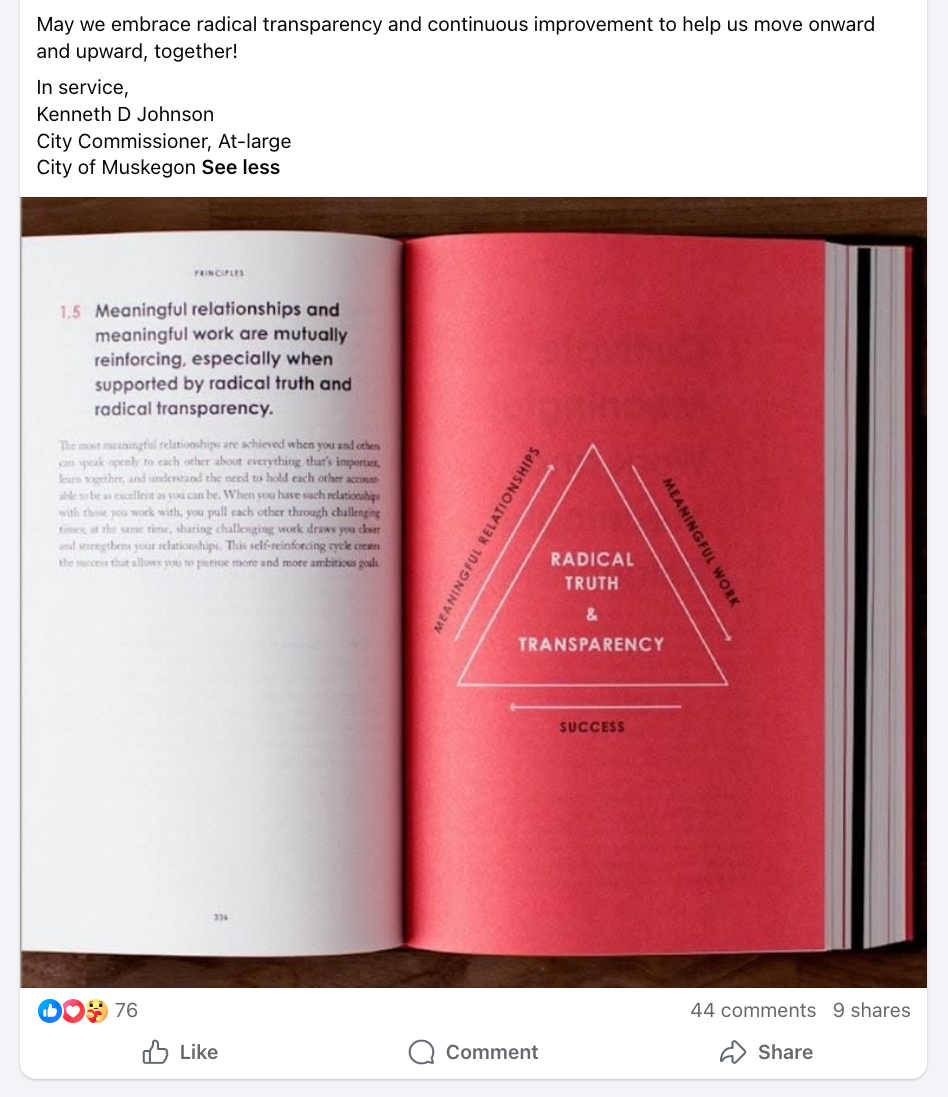
Now look at the most recent City Commission Meeting. The Third Street Wharf grant is $2.8 million from the state. About $400,000 has already been spent, so about $2.4 million is left. That is roughly twelve times the gift-card money. On Sept. 22, now-mayor Johnson voted to let City Manager Jonathan Seyferth hire contractors and pay them without bringing each job back to the Commission first. No supporting documents were in the agenda packet, just the short staff form. There were no prospective contracts, no list of bids, and no sheet that said what the money would be spent on.
So the problem is the same shape both times. Staff wanted to utilize public money without the usual Commission approval, and the paper trail in front of the Commission was thin. In 2020, Johnson treated that as a reason to open the books and call for public transparency. In 2026, he made no mention of the lack of supporting documents for this agenda item and said he "trusts that our city manager and staff are going to spend these dollars appropriately."
The part he did not press is the seven months in the middle.
The Commission approved the development agreement on Dec. 9, 2025. At the time, the city said it expected to close on the Third Street land in early 2026, and to have some public access that summer. The state money was already on a 2026 clock, and by then the city had already been given two extra years to spend it. Closing did not happen in the winter or the spring. It happened on Sept. 16, 2026, six days before the Commission voted to give the manager spending power.
The design request did not go out early either. The city published the request for a park designer at the end of June, about seven months after the agreement. Twelve firms answered. In late August, before closing on the wharf property, the Commission hired Progressive Companies for $96,621 to design the park, talk to the public, and do the engineering. The manager later said that hire alone took almost two months. A sewer line the grant was supposed to move was studied through the summer, and then dropped about two weeks before the Sept. 22 vote, because the soil was poor and the ship was not going to sit as far south as planned.
On Sept. 22 the manager said the city could not build on land it did not own. That explains why work was not being done on the site throughout the year, but it does not explain why the design request waited until June. You do not have to own the land to ask a designer what the park could look like, or to price the sidewalk, or to tell the public what the $2.4 million is for. Why wasn't this type of work being done earlier in the year, if an end-of-2026 grant money deadline was looming? Johnson did not ask which city employee owned that schedule from December to June. He did not ask why the closing slipped from early 2026 to the middle of September. He did not ask what the $400,000 already spent had bought, month by month. Instead, he called Commissioner St. Clair's remarks well-framed, and then said she was right that this was not about transparency.
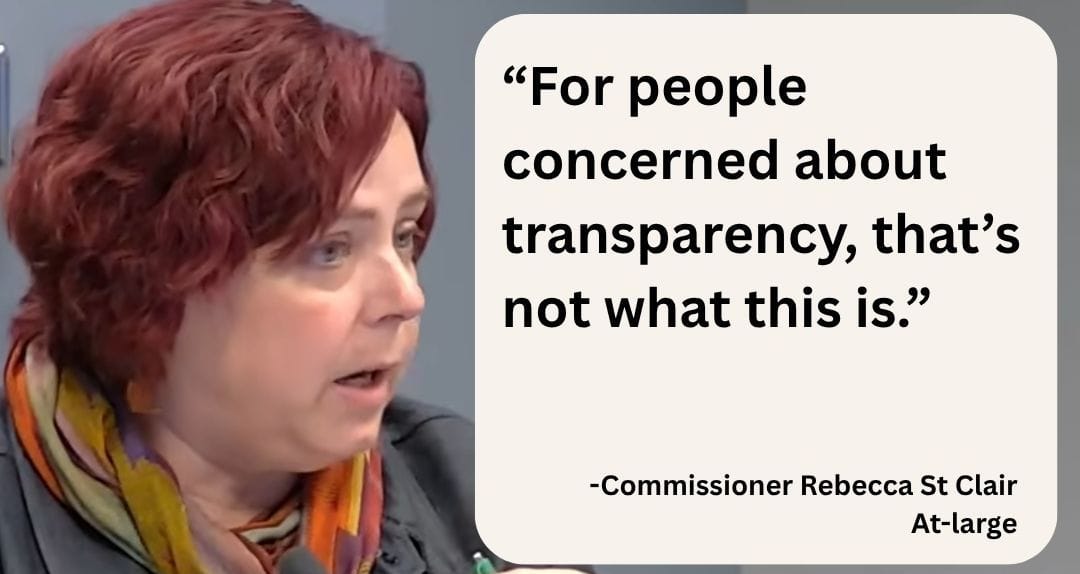
Would the Johnson of 2020 have demanded an audit of city staff work that was done during the seven months that had passed since the development agreement was signed? Likely, but the Johnson of 2026 did not ask for a one-page picture of the park, or a draft list of who would be hired, or even a list of the work to be performed at the wharf site.
If the goal is to keep this from happening again, these are the questions the mayor and the commissioners should be asking now, publicly, before the next deadline sneaks up.
- Who was in charge of the schedule from December to June? Was it the manager, public works, or someone else?
- Why did the closing slip from early 2026 to Sept. 16? Was it the title, the survey, the appraisal, the soil, or the other party?
- Why did the request for a park designer wait until the end of June, when the agreement was approved in December?
- What did the $400,000 already spent buy, month by month?
- The city had already been given two extra years for the grants. When did staff ask for a third, and what did the state say before September?
- The second pot of money was set to run out on Sept. 30, and then it was moved to Dec. 31. When did staff learn that, and did they wait on it?
Those questions are a good start to the post-mortem. A post-mortem is a look back, after the fact, at what slowed the work down and who was supposed to move it along. It does not have to be a punishment. It is the same kind of outside look Johnson asked for in 2020, pointed at this project, so the next state dollar is not spent in a rush because seven months went by with no public schedule. The manager and the staff work for the people who live here. A short, public review of the wharf timeline is how the Commission makes sure they are protecting that interest, instead of finding out in September that the clock is almost gone.
Set the two numbers next to each other. In 2020, $195,000 had already been spent the wrong way, and Johnson wanted an auditor. In 2026, about $2.4 million was still sitting there, and he voted to give the manager control over how it is deployed. The man who used to want the books open is now the man running the meeting. On this item, he did not use the privilege of his chair to discover what went wrong for the Third Street Wharf project.
And a few questions sit with the mayor himself. What did he ask, in public during those seven months, to make sure the Third Street Wharf project was being handled with the care it deserves? Was he aware of issues that existed and if so, what was he doing to resolve them?
Will Mayor Johnson find the will to embrace radical transparency and accountability once again? Time will tell.
Watch The Commission discuss Third Street Wharf spending here:
Packet: September 22, 2026 agenda packet
Comments